




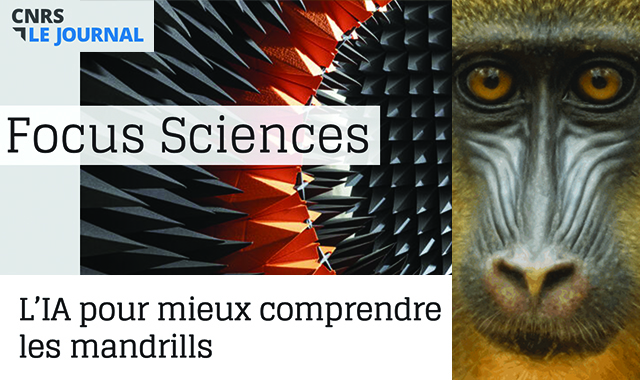
Researchers at LIRMM, in collaboration with the Mandrillus program, have recently demonstrated that artificial intelligence can be a powerful tool for analyzing the nonverbal communication of mandrills living in their natural environment. Using a vast database of images collected over more than a decade, scientists have trained computer vision models capable of quantifying facial resemblance, characterizing morphological traits, and exploring their link to social dynamics.
This computational approach makes it possible to identify patterns that were previously difficult to observe, particularly in the recognition of kinship, social organization, and sexual selection mechanisms. By modeling how a primate brain might process certain visual signals, AI offers a new way to understand the evolutionary pressures that shape these characteristics.
Contact : William PUECH
For more information on the methodology and results, see the full article in the Journal du CNRS :
https://lejournal.cnrs.fr/nos-blogs/focus-sciences/lia-pour-mieux-comprendre-les-mandrills