



|
|
Keynote Talk 1:
"Integrated Calibration, Validation, and Test -- Rethinking Quality Management Through Reduce, Reuse, and Recycle"
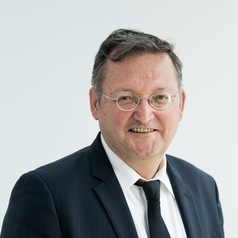
K.-T. Tim Cheng from Univ. of California, Santa Barbara, USA
|
|
|
Abstract: Test will continue to play a critical role in the late-silicon era, but it must be part of a total system validation and reliability solution, instead of an isolated task solely for the purpose of ensuring individual component quality. Also, test must share the same DFX (Design for X) resources with other critical quality assurance tasks -- where "X" includes characterization, post-silicon validation, testability, fault diagnosis, and yield improvement -- for overall cost reduction and quality improvement. In this talk, I will show specific examples and trends in mixed-signal/RF domains to illustrate the changing role of test.
Cheng received his Ph.D. degree in Electrical Engineering and Computer Science from the University of California, Berkeley in 1988. He worked at Bell Laboratories in Murray Hill, NJ, from 1988 to 1993 and joined the faculty at the University of California, Santa Barbara in 1993 where he is currently Professor of the Electrical and Computer Engineering Department. He was the founding director of UCSB's Computer Engineering program (1999-2002) and Chair of the ECE Department (2005-2008). He has been a visiting professor at University of Tokyo, Japan and National TsingHua University, Taiwan, and an adjunct professor at Peking University, China. His current research focuses include VLSI test, design verification, silicon debug, and multimedia computing. He has published over 300 technical papers, co-authored five books and holds 12 U.S. Patents in these areas. Cheng currently serves on the executive committee of the Gigascale System Research Center (GSRC) and was co-director of both the International Center of System-on-Chip and International Center on Design for Nanotechnologies, jointly sponsored by National Science Foundation USA, Chinese National Science Foundation China, and National Science Council Taiwan, and leading these organizations’ validation, test and verification research efforts.
Cheng, a fellow of IEEE, received several Best Paper Awards, including the awards at the 1994 and 1999 Design Automation Conferences, 2001 Journal of Information Science and Engineering, 2003 Conference of Design Automation and Test in Europe (DATE 2003), 2007 IEEE Asian Test Symposium, 2008 IEEE VLSI Test Symposium, and 1987 AT&T Conference on Electronic Testing. He received the UCSB College of Engineering Outstanding Teaching Faculty Award in 2004-2005. He served as Editor-in-Chief for IEEE Design and Test of Computers (2006-2009) and currently serves on the editorial board of several journals.
|
Keynote Talk 2:
"Low-power implantable devices for onset seizures detection and subsequent treatment"
Mohamad Sawan from Polytechnique Montreal, Canada
|
|
|
Abstract: Currently emerging brain-machine interfaces (BMIs), dedicated to both intracortical biosensing and treatment, are promising alternative to allow addressing dysfunctions at the level of central neural systems. Sensing side allows studying the neural activity underlying cognitive functions and pathologies, understanding neurons interactions, locating seizures, detecting mind driven decisions, etc. Treatment parts permit to limit pathologies progresses, recover lost functions, etc. This talk covers low-power specific analog circuits design, implementation and integration of a BMI biosensing Microsystems intended for Epileptic patients. In particular, we will focus on Epilepsy seizures monitoring, onset detection and subsequent treatment, altogether with a global view of a complete implantable device including harvesting energy to power it up.
Mohamad Sawan was born in Lebanon, received the B.Sc. degree in 1984 from Laval University, and the Ph.D. degree in 1990 in electrical engineering, from Sherbrooke University, Canada. He joined Polytechnique Montréal in 1991, where he is currently a Professor of Microelectronics and Biomedical Engineering. His scientific interests are the design and test of mixed-signal (analog, digital, RF, MEMS and optic) circuits and Microsystems: design, integration, assembly and validations. These topics are oriented toward the biomedical and telecommunications applications. Dr. Sawan is a holder of a Canada Research Chair in Smart Medical Devices. He is leading the Microsystems Strategic Alliance of Quebec (ReSMiQ) receiving membership support from 11 Universities.
Dr. Sawan is Deputy Editor-in Chief of the IEEE Trans. on circuits and systems II (TCAS-II), Editor/ Associate Editor of several International Journals such as the IEEE Transactions on Biomedical Circuits and Systems (TBioCAS) and the Springer Mixed-signal Letters. He is founder / co-founder of several IEEE International conferences such as NEWCAS, BiOCAS, and ICECS, he is the founder of the Polystim Neurotechnologies Laboratory at Polytechnique Montréal. Dr. Sawan published more than 500 papers in peer reviewed journals and conference proceedings, and he was awarded 9 patents pertaining to the field of biomedical sensors and actuators.
Dr. Sawan received several prestigious awards; the most important of them are the Medal of Honor from the President of Lebanon, the Bombardier Award for technology transfer, the Barbara Turnbull Award for medical research in Canada, and the achievement Award from the American University of Science and Technology. Dr. Sawan is Fellow of the IEEE, Fellow of the Canadian Academy of Engineering, Fellow of the Engineering Institute of Canada, and Officer of the Quebec’s National Order.
|
| |
|